
The experience of working with AI image generation technology creates a sense of entering an entirely different universe for users who lack experience and need to optimize their limited computer resources. The tool Stable Diffusion 3.5 enables users to create authentic and visually appealing content which provides them with numerous artistic options. The process of using Stable Diffusion 3.5 becomes easier for users who create digital design spaces and test authentic materials because they gain from understanding this technology. The article will examine the unique features of this version, demonstrate its practical applications, and provide users with essential tips for achieving optimal results with Stable Diffusion AI online.
Explore Stable Diffusion 3.5’s new features and tips with DigiMathurReviews – your guide to mastering AI image generation like a pro!
What is Stable Diffusion 3.5 and How It Stands Out
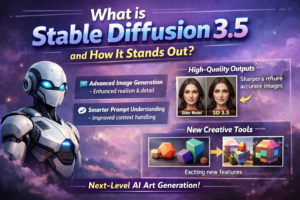
Stable Diffusion 3.5 exists as the newest iteration of the well-known AI image generation software which enables users to produce high-quality realistic visual content. The system delivers improved performance through its enhanced ability to manage textures and lighting effects and shadow details which results in more authentic and visually attractive outputs than previous versions. Users who have worked with Stable Diffusion before will find this version produces authentic outcomes through its simplified prompt system. The system enables artists and designers and hobbyists to explore different visual effects through minor adjustments which result in major changes.
Stable Diffusion 3.5 provides its users with the ability to handle complex scenes through its improved system performance. Users can work with stable diffusion 3.5 large or medium models depending on their system resources. The medium version, including automatic1111 setups, balances performance and image quality well, making it accessible for those running it locally or online. Your creative workflow will benefit from time savings when you learn which model to use between different options.
Exploring Stable Diffusion AI Online

Stable Diffusion online platforms enable software-free users to create their first images without installation requirements. The online tools provide stable diffusion AI functions through web interfaces which allow users to input prompts and receive results within a few minutes. The platforms enable you to test various styles and textures without the need to download large files or use advanced computing equipment.
The online stable diffusion system provides users with an effective method to study the differences between medium and large models. The medium version requires less processing power while still delivering impressive results. The system stable diffusion 3.5 large provides better visual results because it creates more accurate details and smoother textures for complex designs. You can determine which version suits your work process and computer system better by testing both options because your requirements will dictate your choice.
Stable Diffusion Prompts and Tips for Better Results
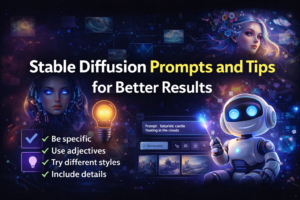
Achieving visually appealing results requires artists to create proper prompts. Prompts function as soft directives which help the AI understand your intended emotional state and visual appearance and textural requirements. The use of natural materials with earthy tones and soft lighting creates generated images which appear more genuine and visually attractive to viewers. The inclusion of wood textures and comfortable fabric details allows a basic idea to develop into an inviting and friendly virtual environment.
Stable diffusion AI tips require users to test multiple prompt lengths while they should use brief descriptive language and they need to change denoising strength settings and step settings. The inpainting feature enables you to edit specific image parts which will not disturb the complete image layout. The process helps to improve corner details through light effects and texture enhancements which require precision work in narrow areas.
Medium and Large Models: Choosing the Right Size
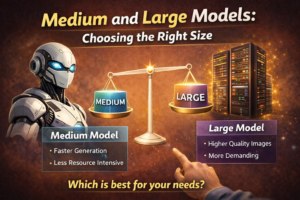
The two model versions of Stable Diffusion 3.5 medium and large serve different operational functions. The medium model operates with high efficiency because it needs less power consumption but still delivers high-quality image results. The system operates best for testing different prompts and creating multiple image variations through its fast testing capabilities. You can download stable diffusion 3.5 medium and set it up locally with automatic1111 interfaces for convenience.
The large model performs best when users require higher resolution and detailed texture. You can use stable diffusion 3.5 medium and stable diffusion 3.5 large to evaluate which version suits your hardware and project requirements better. Both versions support safetensors, which ensures faster loading and better memory management. The strengths of each model help you create more effective plans for your creative work.
Understanding Medium Requirements and Performance
To run stable diffusion 3.5 medium, you need a compatible GPU together with sufficient VRAM and updated drivers. The medium model requires fewer resources than the large model, but a stable environment proves essential for optimal performance and minimal service interruptions. Performance becomes less critical for online platforms, yet knowing local requirements proves helpful when users need to shift between offline and online modes.
The system needs Python to operate in local environments according to its medium requirements. Automatic1111 provides an interface that makes installation easier while enabling users to control settings through simple methods. The requirements help you concentrate on creative work because they reduce your need to solve technical problems.
Inpainting and Fine Tuning Your Images
One of the most beneficial functions of Stable Diffusion 3.5 inpainting enables users to modify particular sections of an image. The tool enables users to make changes to particular parts of an image without needing to recreate the entire picture. You can use this feature to reduce shadow intensity, improve surface details, and modify small border areas until they meet your preferred design standards. The feature provides compatibility with all model sizes because it allows users to implement minor adjustments or complete transformation of the system.
When you perform inpainting work, you need to pay close attention to both your lighting and material selections. The combination of soft natural light and warm wood tones together with cozy fabrics creates an effective method to establish a grounded atmosphere in the image. The combination of inpainting with accurate prompts allows for natural-looking edits which integrate perfectly with the entire composition.
Comparing Stable Diffusion 3.5 vs XL and Future Versions
Stable Diffusion 3.5 concentrates on product usability and real-world applications, while its upcoming XL version and subsequent releases will extend their capabilities to support higher detail levels and larger environments. Stable diffusion 3.5 vs XL comparisons show that XL offers higher resolution and better handling of very complex scenes, though it requires more system resources.3.5 gives most users a suitable option which combines both high-quality output and easy-to-use features.
The latest stable diffusion version updates should be monitored because they offer valuable information. The new release brings enhancements to texture handling and color balance and model efficiency. The updates provide important information which enables you to discover new features and improve your work process.
Practical Ideas for Applying Stable Diffusion in Creative Projects
There are countless ways to use Stable Diffusion 3.5 in creative projects. Artists can create mood boards while designers use Stable Diffusion 3.5 to create interior designs and hobbyists use the program to test different texture and color combinations. You can achieve inviting and authentic visual effects through your use of natural materials and soft lighting and structured spaces.
Small digital spaces show that testing prompts which contain earthy colors and comfortable materials and gentle light sources produces unexpected results. Users should choose between medium and large models because their requirements will determine which model size will deliver sufficient image detail for their digital portfolios and concept sketches and social media content.
Tips for a Smooth Workflow with Stable Diffusion 3.5
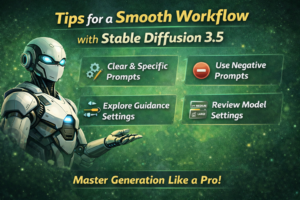
Your workflow operations require initial organization of your prompts and presets and generated images. The process of tracking settings and model versions and output quality allows researchers to develop their ideas more effectively. The implementation of safetensors for both medium and large models enables faster loading times and decreased memory consumption.
You can improve your creative process by testing different prompts and reviewing the results from inpainting and medium versus large outputs at stable diffusion. Through regular practice you will learn how different prompts change the textures and lighting and composition of images which makes them visually appealing and coherent.
Wrap-Up: Encouraging Creativity with Stable Diffusion 3.5
Stable Diffusion 3.5 enables users to investigate AI-generated visual content through its practical implementation of artificial intelligence. Artist should study model dimensions and inpainting capabilities and execution methods on the internet and through local systems to achieve their goal of creating authentic and aesthetically pleasing images. Your digital creations will gain depth and warmth through your experimentation with soft lighting and earthy tones and cozy textures.
Stable diffusion 3.5 medium provides efficient operation while its large model delivers more precise details for your creative work, but this tool maintains a balance between workspace efficiency and project enhancement. You should continue to test different prompts while you modify your settings and experiment with various lighting options and material selections. Your Stable Diffusion AI experience will develop into a fulfilling creative process through your persistent exploration and inquisitive mindset, which will generate visual content that exhibits your individual style and functional design principles.
More about AI updates:
Stable Diffusion 2026 Update: New AI Features Released