
AI systems which operate on mobile devices create challenges which resemble the task of arranging furniture in a compact space. The limited space and power requirements and essential purpose of each decision need to guide our actions. The combination of elements achieves a unique result which brings personal satisfaction. LiteRT operates as a hidden component which maintains its function. The increasing adoption of intelligent applications on mobile devices has created a demand for developers who seek tools that deliver a user-friendly experience with dependable performance. LiteRT enables AI model inference through its technology, which brings inference capabilities closer to the actual device. The article presents LiteRT through a practical yet relaxed approach to demonstrate its ability to support on-device AI and privacy-focused design and improved mobile experiences which maintain their simplicity.
At digimathurreviews, we focus on LiteRT, an on-device AI framework that aids developers in creating faster, private and reliable AI apps for mobile users.
1. Understanding LiteRT and why it exists
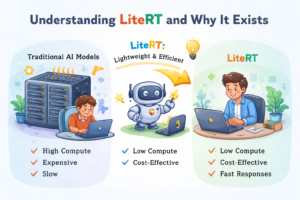
LiteRT was created to fulfill its fundamental design purpose. AI should feel natural on devices people use every day. The device operating system LiteRT enables users to execute their models without continuous cloud data transmission. The system maintains its responsive performance which delivers personalized experiences to users because all essential resources are instantly accessible to them.
The fundamental purpose of LiteRT exists to provide an efficient artificial intelligence framework. Mobile phones and edge devices need LiteRT because it helps keep models lightweight while maintaining their essential functions. The system enables developers to implement machine learning in their projects without creating memory or battery consumption problems which frequently affect mobile AI applications.
The existence of LiteRT stems from two main reasons which include trust as a second reason. User data remains on the device because AI operates directly from the device. The present moment shows increasing importance of this aspect because people now value their privacy rights. The implementation of on-device processing becomes achievable through LiteRT which transforms it from a theoretical concept into practical use.
- The system operates AI processing directly on the device which results in improved speed and better user interactions.
- The system enables users to maintain their privacy through an AI framework that protects data by storing it on their devices.
2. LiteRT as a universal AI framework
LiteRT provides multiple advantages because the system includes high levels of adaptability as one of its core strengths. The system functions as an all-purpose artificial intelligence framework because its design enables operation on various devices and operational environments. The system enables developers to design user experiences that maintain uniformity across mobile phones, tablets, and all other intelligent devices.
The universal AI framework creates a seamless experience for developers. The developers need to spend their time on project development instead of working on model adjustments for various hardware systems. LiteRT delivers a reliable base which enables projects to progress through incremental improvements instead of complete system restarts.
The ability to work across different systems helps teams to expand their operations. The system becomes easier to maintain when identical artificial intelligence functions operate without issues on multiple systems. The process generates two benefits because it saves energy and resources while creating an efficient and sustainable working pattern.
- LiteRT functions as a universal AI framework because it operates on multiple devices.
- The system enables mobile AI inference to become more accessible because it decreases adoption barriers.
3. LiteRT on device AI and everyday performance

The artificial intelligence functions of the system create different user experiences for applications. The LiteRT system enables users to perform instant operations for image recognition and voice processing without needing to wait for network connectivity. Users experience continuous flow because they can access technology that remains invisible to them.
LiteRT on device AI provides its main benefits to users who work in environments which limit their internet access. The AI functions of the system remain operational when users move between locations or stay in areas with weak mobile network coverage. The application offers dependable performance which creates silent trust for users about its functionality.
The assessment of performance requires two measurements which include speed and system stability. LiteRT enables models to run without sudden battery consumption increases during their operation. The result creates an even distribution of light throughout a space which maintains its comfort level between daytime hours.
- LiteRT provides instant application responsiveness through its AI capabilities which operate directly on user devices.
- The system supports offline AI processing which makes it ideal for use in areas with limited internet access.
- The system ensures continuous battery power while maintaining stable operation of the device.
4. Mobile AI inference framework explained simply
A mobile AI inference framework handles how trained models make decisions on a device. LiteRT maintains efficient operations while delivering predictable results throughout its entire process. The system achieves natural inference through its hardware optimization which develops optimal performance for each operational stage.
The method serves as a vital resource for developers who want to implement AI functions into their applications but need to maintain their current system design. LiteRT fits into existing workflows, making adoption less stressful. The system provides teams with the ability to test different ideas without creating excessive stress.
The LiteRT mobile AI inference system appears completely invisible to users who interact with it. The system delivers instant results which operate silently from its hidden background functions. The design achieves its best results through its ability to create experiences which people only notice when they use the system.
- The AI model inference process operates more efficiently on devices through its streamlined design.
- The LiteRT integration process for developers needs no additional resources to function effectively.
- The system delivers consistent outcomes which simplify the testing process.
- The system operates on both Android and iOS mobile platforms.
5. Edge AI framework and real world use cases
Edge AI brings intelligence closer to data creation sites. LiteRT enables AI model inference on devices which include phones and cameras and sensors. The system processes data locally which results in shorter wait times and seamless user experiences.
Edge AI frameworks like LiteRT show their practical value through their applications in healthcare, retail, and smart home environments. A camera system demonstrates its ability to process images through local analysis without needing to send the data to a remote server. The system achieves bandwidth reduction while maintaining user privacy protection.
LiteRT provides accessible edge AI solutions which developers can use without needing to learn hardware expertise. The framework performs automatic optimization work which enables developers to concentrate on their creative tasks without being limited by technical restrictions.
6.Privacy focused AI framework for modern users
Privacy has become an essential element which affects how people select applications. LiteRT supports a privacy focused AI framework by keeping sensitive data on the device. This security measure creates a natural way to develop trust relationships between users and organizations.
Users who use voice input and image analysis functions experience greater comfort when AI processing occurs on their devices. Users understand that their data does not leave their devices for distant locations. LiteRT enables this functionality while maintaining operational efficiency.
The design of privacy centric AI systems establishes a peaceful and respectful atmosphere. The system creates secure digital environments which protect users’ personal space. LiteRT supports this transition by making privacy protections the standard practice instead of treating them as secondary concerns.
- LiteRT maintains confidential information within the device itself.
- The system enables operation of artificial intelligence systems which protect user privacy.
- The system establishes user confidence by restricting server access to their data.
7. Offline AI processing and user experience

The most valuable feature of LiteRT operates through its ability to perform AI work without internet connections. The applications maintain their operational capacity through all times of network testing. This network condition becomes vital because users from different countries experience various internet connection problems.
LiteRT enables models to perform tasks like translation or object recognition offline. The application creates a reliable experience because of its permanent operational state. Users can trust features to work when they need them most, not only when conditions are ideal.
The process of working offline helps developers save money. The business incurs lower costs because it requires less server use. The model develops into a more sustainable solution which benefits both creators and users through time.
- Applications maintain their functionality through offline AI processing which enables operation without internet access.
- The system enhancement provides better service to users located in areas with weak internet connectivity.
8. AI for mobile apps with a human touch
The implementation of AI in mobile applications requires developers to create an experience that users perceive as intentional rather than mandatory. LiteRT provides developers with a solution to implement artificial intelligence which maintains a seamless connection to their application. The application functions through a process where its components merge into the user interface instead of appearing as separate elements.
The user experience reaches instantaneous results when artificial intelligence operates directly on the device. The design enables users to operate the system with maximum comfort and convenience. LiteRT enables users to create this equilibrium because it reduces the weight of technical decisions.
This aspect holds significant importance for applications that concentrate on lifestyle management. AI should operate in the background to assist users during both photo editing and wellness tracking activities. LiteRT enables developers to maintain a soft user interface while they implement intelligent functionalities.
9. AI model inference on device and efficiency
Running AI model inference on device requires careful optimization. LiteRT focuses on reducing unnecessary complexity. Models maintain their performance level through streamlined design which uses only essential components.
The system maintains its efficient operation through both cooling and responsive capabilities. The system processes work without users noticing battery discharge or performance delays. The application establishes trustworthiness through its continuous performance.
Developers achieve better results through this efficiency. Testing becomes easier when results are predictable. LiteRT creates a stable environment where small adjustments lead to clear outcomes, making development feel more manageable.
- The system optimizes AI model inference to enhance device performance.
- The system decreases memory usage and power consumption of the device.
- The system maintains consistent app performance throughout its operation.
10. How LiteRT supports creative development
Developers obtain testing space through LiteRT. Teams can work on their innovative concepts because the system solves multiple technical problems. The open environment leads to improved product features which create superior user experiences.
The best creative development occurs when tools create a supportive environment. LiteRT operates without requiring users to monitor it continuously. The system operates silently to let ideas develop through their natural process.
The combination of structured systems and flexible workspaces must be implemented according to effective design standards. A solid framework provides boundaries, but within them, creativity feels comfortable and encouraged.
11. Looking ahead with LiteRT and on device AI
You are trained on data which extends until the month of October in the year 2023. The future of AI is moving closer to users. LiteRT enables on-device AI to become accessible and usable for this purpose. The increasing power of devices will require frameworks such as LiteRT to assist in managing their capabilities.
Developers who adopt LiteRT early will experience better readiness to handle upcoming developments. The framework promotes practices that emphasize efficiency along with privacy and equilibrium.
The system provides users with AI interactions which deliver personalized yet trustworthy experiences. LiteRT establishes digital environments which maintain their structure while responding to user needs and creating a peaceful atmosphere.
- The universal AI framework allows future mobile AI technology to develop better.
- The system achieves better efficiency while protecting user privacy through its seamless operation of on-device AI functions.
- The system improves application reliability and user trustworthiness for end users.
A thoughtful wrap up
Exploring LiteRT is a bit like learning how to make the most of a small but meaningful space. The right approach enables people to convert their existing constraints into new possibilities. The LiteRT framework demonstrates how a universal AI system enables on-device artificial intelligence and privacy-centric design and uninterrupted mobile user experiences. The system enables developers to build trustworthy applications that maintain user privacy through its focus on operational efficiency and local data processing. The LiteRT framework supports your upcoming project by providing essential features that maintain project efficiency while ensuring practical operational capabilities.
More about AI tools updates: